
Ask three painters how many coats of paint for interior walls a room needs, and you might hear three answers. One quotes a single coat to win the bid. Another says two without looking at the wall. The honest answer to how many coats of paint your home needs depends on the color you have, the color you want, and the condition of the surface underneath.
I run Pilot Painting LLC, and our crews paint homes across the Winchester area all year long. Coats come up on nearly every estimate, because the number of coats changes both the price and how long the finish lasts. If you want to see how we prep and paint walls, ceilings, and trim before you keep reading, our interior house painting services page lays out the full process.
Key Takeaways

Why “Always Two Coats” Isn’t the Whole Answer
A lot of painters say two coats every time. It’s a safe default, but it isn’t a rule written on the can. Benjamin Moore lists 1 or 2 recommended coats for Regal Select, one of the interior paints we use. That means a second coat is sometimes optional, not required.
I’d rather tell you when one coat is enough than charge you for a coat you don’t need. I’d also rather tell you when two coats won’t be enough, before you see thin spots on your walls after we leave.
One Coat vs. Two Coats vs. Three: Side by Side
Here’s how the options compare in a typical home. The right choice depends on the wall in front of you, not a standard package.
| Number of Coats | When It Usually Works | The Trade-Off |
|---|---|---|
| One coat | Same or very close color, clean walls, quality paint | Lower cost, but no margin for thin spots |
| Two coats | Most repaints, moderate color changes, minor patches | More labor, but even color and a stronger film |
| Primer plus two coats | Bare drywall, stains, dark to light, light to dark | Highest labor, but the most reliable hide |
Most repaints we see land in the middle row. Two coats give the color a chance to look even in every kind of light, from morning sun to lamps at night.
What Decides How Many Coats of Paint You Need
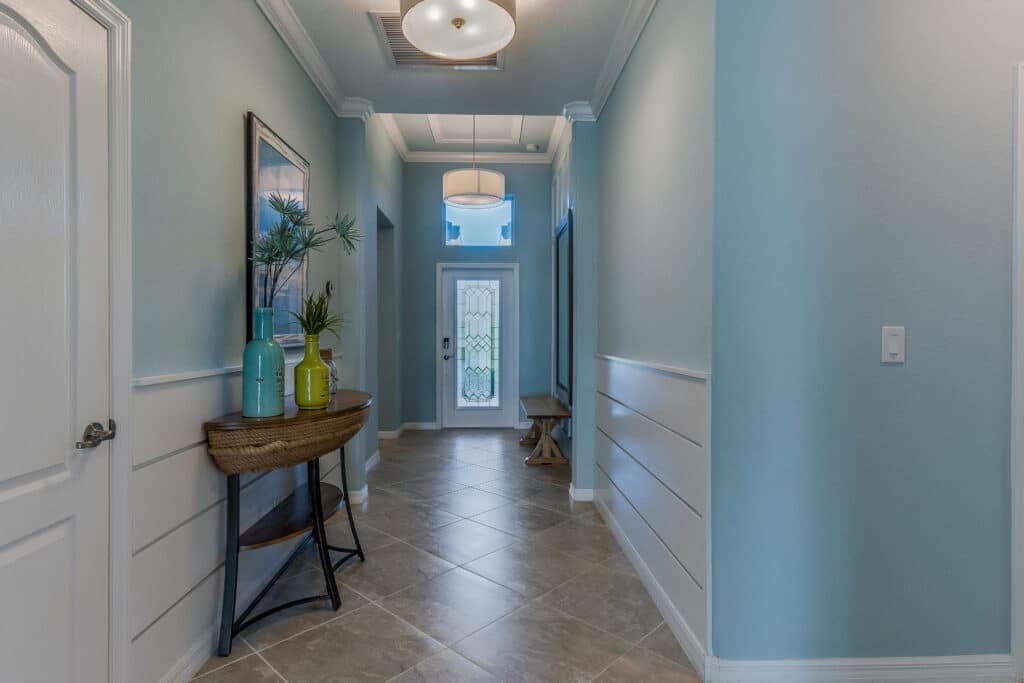
Four things drive the count on almost every job. When I walk a room for an estimate, these are what I check first.
How Many Coats of Primer Do You Need?
Most surfaces that need primer only need one coat. Primer seals the surface so the finish coats look even. It doesn’t replace finish coats, and it doesn’t fix poor prep.
| Surface | Primer Needed? |
|---|---|
| Painted walls in good shape, similar color | Usually not |
| Patched holes and drywall repairs | Spot prime the patches |
| New or bare drywall | One full coat |
| Water or smoke stains | One coat of stain-blocking primer |
| Big color change, dark to light | Often one coat, sometimes tinted |
Paint and primer combination products help in some cases. Still, bare drywall and heavy stains usually need a dedicated primer for the finish to look right.
The Part Nobody Talks About: Paying for Coats You Can’t See
Here’s the honest problem with this question. Once paint dries, you can’t tell by looking how many coats went on your walls. You’re trusting the crew.
That’s why a lot of homeowners feel uneasy comparing quotes. One price looks lower, but it might cover one coat while another covers two. A fair comparison starts with knowing exactly what each painter is quoting.
What Can Happen When a Job Gets Short-Coated
Cutting a coat or rushing between coats usually shows up within weeks. Here’s what to watch for:
Sherwin-Williams notes that adding coats too soon leads to uneven drying and uneven coverage, so timing matters as much as the count. Fixing any of these later usually takes more work than a proper second coat would have.
My Plan for Getting the Coat Count Right
I keep our process simple so you always know what you’re paying for. Every step starts with your home, not a preset package.
Every painter on our crew passes a county and national background check, and our work is backed by a 3-year workmanship warranty. Color consultation is included with every painting contract. You can see each surface we handle, from walls and ceilings to trim and drywall repair, on our interior house painting services page.
Questions to Ask Any Painter Before You Sign
Whoever you hire, these questions protect you from paying for less than you think:
A painter who answers these clearly in writing gives you a quote you can actually compare.
Interior Painting Around Winchester
We paint interiors year-round for homeowners in Winchester, Berryville, and Stephens City. Winter is a good time to schedule inside work, since exterior painting pauses for the colder months.
What a Properly Coated Room Feels Like
When the coat count matches the wall, the color looks the same from every angle and in every light. Patches disappear. Corners match the middle of the wall. A year later, a scuff wipes off without leaving a bare spot behind.
That’s the result worth paying for. A clear plan up front means you never have to wonder what’s on your walls.
Ready for a Straight Answer on Your Walls?
You don’t need to guess whether your rooms need one coat, two, or primer first. Pilot Painting LLC will walk your home, look at every surface, and give you a detailed proposal before any work begins. Call 540-426-3075 to schedule your free estimate, or visit our interior house painting services page to see how we work first.