
Your siding is telling you something, and paint chalking is one of the clearest messages it sends. A chalky white film on your palm after you run a hand down the wall means something very different from paint curling off in sheets. Most homeowners treat all exterior paint problems the same way, which is to repaint over them. That is why the same spots fail again two summers later. Peeling, chalking, and cracking each come from a different cause, and each one calls for different prep before a brush touches the wall. Reading the signs correctly before you buy an exterior house painting job decides whether the new coat holds or repeats the same failure.
Key Takeaways

Why Exterior Paint Problems Get Misread
You walk the outside of your house on a Saturday. The south wall looks faded. The trim near the gutter has a flake lifting. There is a spot by the porch that looks like dried mud cracks. It all reads as one thing: the house needs paint.
That read is half right. The house probably does need paint. The part that gets missed is why the old coat gave out, and that answer changes the work order. Paint applied over a surface that is still failing underneath will fail in the same place, usually faster the second time because the new film has even less to hold onto.
Three symptoms show up again and again on homes around Winchester. They look similar from the driveway. Up close, they are not similar at all.
Peeling, Chalking, and Cracking Side by Side
Here is the short version before we walk through each one. The right column is the part that costs money, because prep is where an exterior repaint is won or lost.
| Symptom | What you see | Most common cause | What the prep has to solve |
|---|---|---|---|
| Peeling | Paint lifting, curling, or coming off in strips and sheets | Moisture, or a surface that was dirty, damp, or glossy when it was painted | Find and stop the water, then scrape back to a sound edge and prime bare material |
| Chalking | A fine powder that rubs off white or light colored on your hand | The binder breaking down under UV, common with older oil-based or thinly spread paint | Wash the powder off completely, then seal the surface so the new coat can bond |
| Cracking / alligatoring | Hairline splits, or a pattern that looks like reptile skin | Layers with different flexibility stacked on each other, or a topcoat applied over an undercoat that was not dry | Remove the brittle layers, not just the loose ones, then rebuild the system |
On homes in our service area, the sources are usually ordinary.
Scraping the loose paint off and brushing new paint on that same spot is the most common repair we are asked to correct. If the water source is still there, the new paint is on a timer.
The test takes five seconds. Press a clean, dark cloth flat against the siding and pull it away.
Chalk also runs. When rain carries it down onto brick, stone, or a lighter trim color, you get streaking that looks like staining. Painting over heavy chalk is like painting over dust, and it is one of the fastest ways to buy a second failure. The powder has to come off first, which is what pressure washing does on our projects.
Cracking Tells You About the Layers, Not the Weather
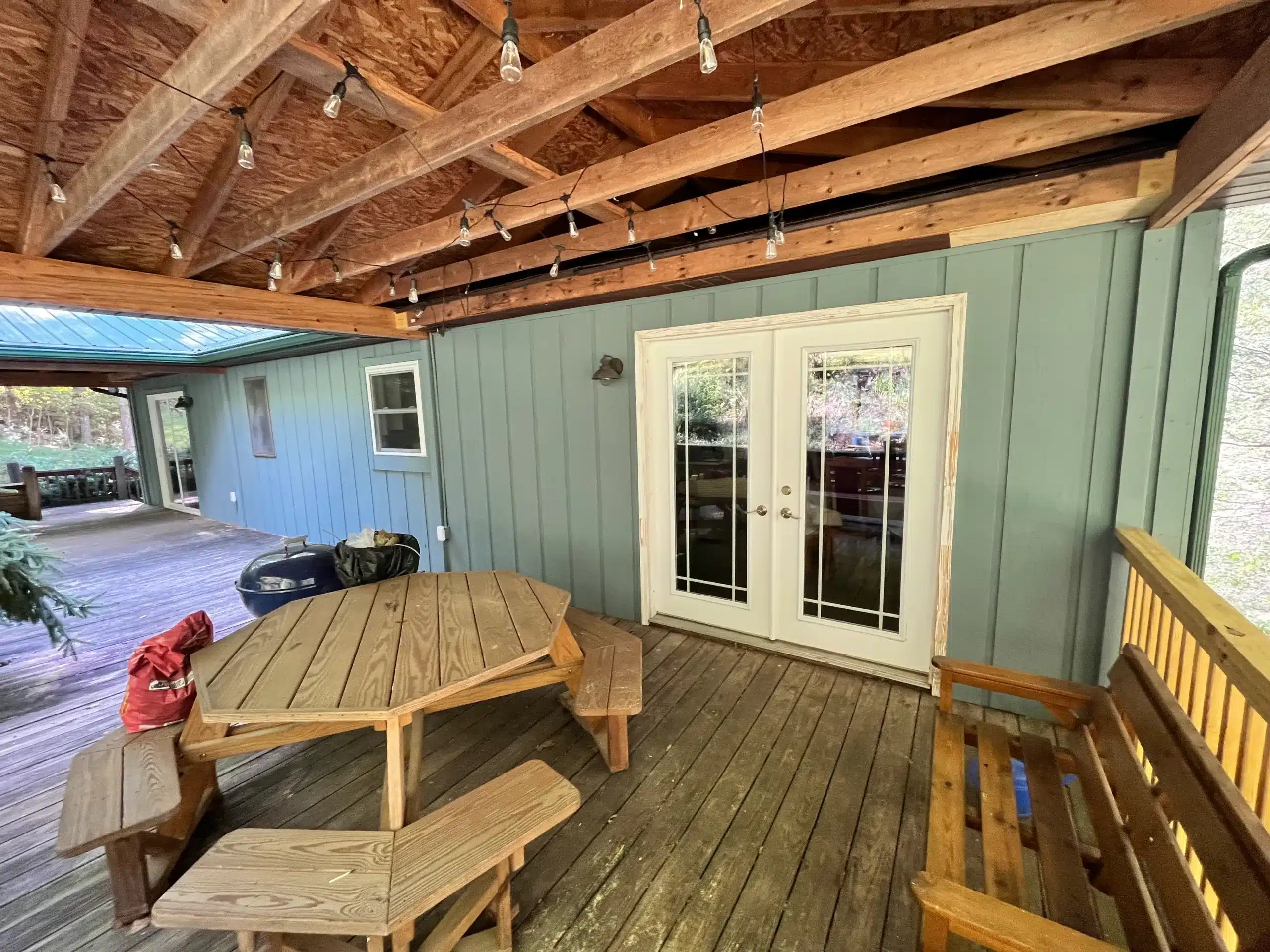
Cracking is a structural story. A hairline crack across a board means the film has lost its flex. A pattern that looks like reptile hide, called alligatoring, means the layers stopped working as one system.
Benjamin Moore attributes alligatoring to a topcoat applied before the undercoat was dry, or to a hard, rigid coating applied over a more flexible layer underneath. In plain terms, somebody put a stiff paint on top of a soft one, and the two stopped moving together through the Virginia freeze and thaw cycle.
This is the symptom with the least forgiving repair. You cannot scrape only what is loose, because the brittle layer that is still attached will crack again. On these walls the old system usually has to come off in full.
What the Age of Your Home Changes
If the house was built before 1978, the layers underneath may contain lead.
The EPA banned the sale of lead based paint for residential use in 1978, and reports that roughly three quarters of U.S. homes built before that year still contain some lead based paint. Under the federal Renovation, Repair and Painting Rule, any firm paid to disturb painted surfaces on a pre 1978 home has to be certified and has to follow lead safe work practices.
This matters most on peeling and cracking, because both repairs involve scraping and sanding. Chalking is washed, not disturbed, so it raises fewer questions. The age of the house is one of the first things we check during the inspection, because it sets the method before it sets the price.
How Our Team Works Through Exterior Paint Problems
We are a locally owned painting company working across the northern Shenandoah Valley and western Loudoun County, including Winchester, Berryville, Stephens City, and Round Hill. Our exterior house painting work starts with the diagnosis, not the color. Here is the order we follow.
Every painter on the crew passes county and national background checks. We hold Virginia Home Improvement Contractor License #2705195747, carry liability and workers compensation insurance, and back our work with a three year workmanship warranty.
Different symptoms get different prep. That is the whole point of looking before quoting.
Ready to Find Out What Your Siding Is Telling You?
You want a paint job that still looks right in year five. The thing standing between you and that outcome is not the brand of paint. It is whether the wall underneath was read correctly and prepped for what it actually needs.
Pilot Painting LLC offers free estimates on exterior house painting across Winchester, VA and the surrounding area. A team member will walk your exterior with you, name what each symptom is, and put the required prep in writing before you decide anything.
Call 540-426-3075 to schedule your walkthrough.